Fire Engineering
Fire engineering is a specialist discipline that looks at how a building will actually behave in a fire, rather than simply checking whether guidance has been followed.
At MAF Associates, fire engineering is about understanding risk properly, using evidence, experience, and professional judgement — and then helping clients make safe, proportionate, and defensible decisions.
Fire Engineering vs Fire Risk Assessment
A Fire Risk Assessment (FRA) focuses on:
- Day-to-day fire safety arrangements
- Means of escape
- Fire alarms, lighting, signage
- Management and maintenance
Fire engineering goes further – It examines the building itself, its design, construction, materials, and fire strategy and then assesses how these elements perform together in a real fire scenario.
What Fire Engineering Actually Involves
Fire engineering considers questions such as:
- How could a fire realistically start?
- How might fire and smoke spread?
- How does the building structure behave in fire?
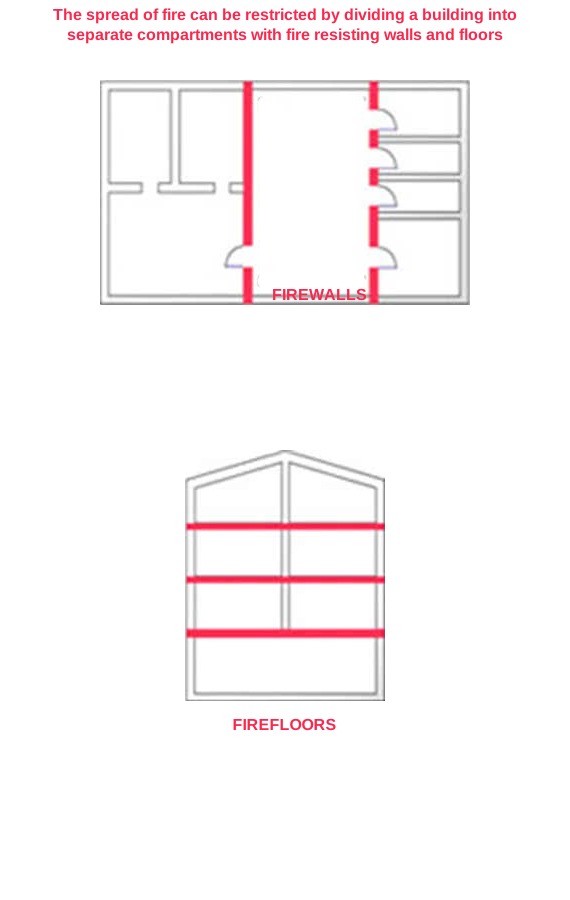
- Will compartmentation perform as intended?
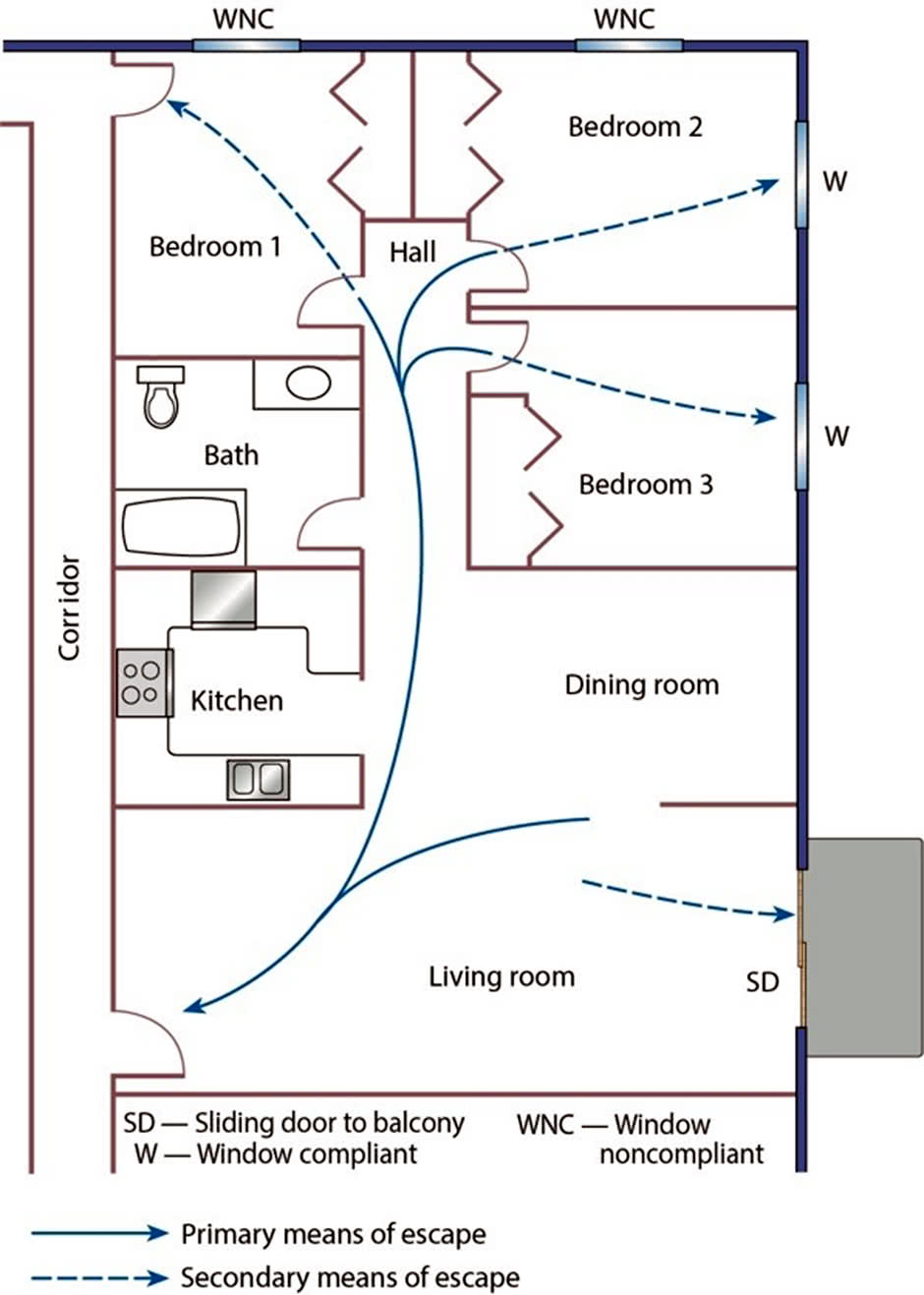
- Can people escape safely?
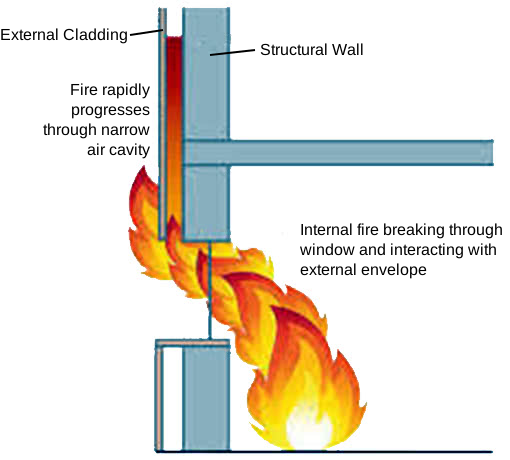
- Does the external wall influence fire spread?
- Is the overall fire strategy robust and proportionate?
This approach recognises that every building is different — especially existing residential buildings.
How Fire Engineering Links to Our Services
Fire engineering underpins many of the services provided by MAF Associates, including:
Fire Risk Appraisals of External Walls (FRAEW)
- Understanding full external wall build-ups.
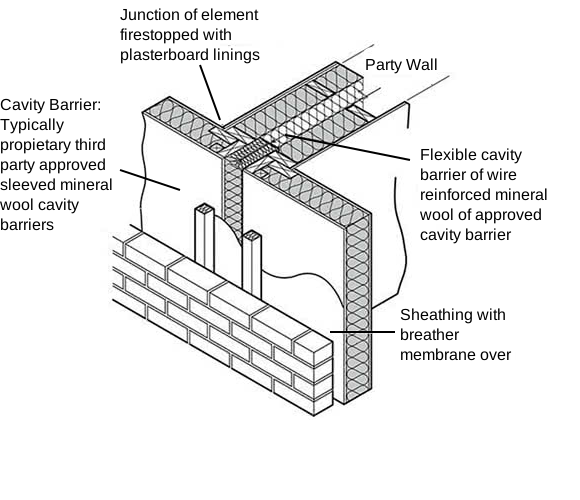
- Identifying combustible materials and cavities.
- Assessing cavity barriers and fire-stopping.
- Applying PAS 9980 methodology.
Fire engineering ensures the assessment is evidence-based, not assumption-led.
PAS 9980 Assessments
PAS 9980 requires a holistic, fire-engineering approach.
This includes:
- Understanding how external walls interact with the internal fire strategy.
- Assessing fire spread risk proportionately.
- Avoiding unnecessary remediation while ensuring safety.
Fire engineering allows risks to be properly evaluated and clearly justified.
Compartmentation & Fire-Stopping Reviews
Fire engineering looks beyond drawings and specifications to assess:
- Whether compartmentation exists where it should
- Whether fire-stopping is effective and continuous
- How defects could affect fire and smoke spread
This is particularly important in existing and refurbished buildings.
Fire Strategy Reviews & Technical Advice
Fire engineering supports:
- Review of existing fire strategies
- Advice where buildings do not meet current guidance.
- Resolution of design constraints or legacy issues.
- Liaison with regulators, insurers, and stakeholders.
The aim is always to provide clear, defensible advice.
Fire Engineering Is Not About Over-Engineering
A common misconception is that fire engineering automatically leads to:
- Expensive remediation.
- Overly cautious conclusions.
In reality, good fire engineering often:
- Reduces unnecessary works.
- Identifies where risks are already controlled.
- Supports proportionate, targeted solutions.
- Helps unblock stalled projects.
Fire engineering is as much about what does not need to be done as what does.
Why Fire Engineering Matters for Existing Buildings
Many residential buildings:
- Were built under different standards.
- Have incomplete or unreliable records.
- Have been altered over time.
Fire engineering allows these buildings to be assessed as they actually exist today, rather than against assumptions or idealised standards.
In Simple Terms Fire engineering:
- Looks at how your building behaves in a fire.
- Goes beyond checklists and surface inspections.
- Uses evidence, inspection, and professional judgement.
- Supports safe, proportionate decisions.
- Provides confidence to owners, residents, lenders, and insurers.
Our Approach
At MAF Associates, fire engineering is:
- Independent.
- Evidence-based.
- Proportionate.
- Clearly explained.
We focus on understanding the building first, then advising on what is genuinely required — no more, no less.