EWS1 Form Certificates & Surveys UK-wide
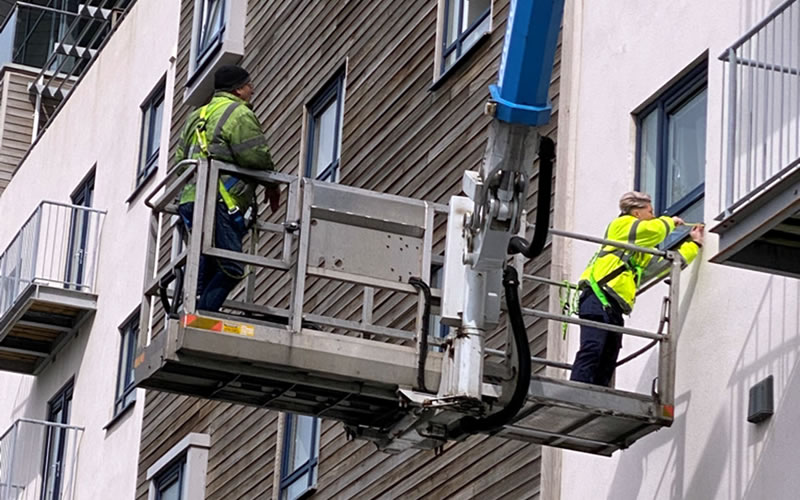
An EWS1 form (External Wall System form) is a one-page statement used by mortgage lenders and valuers to confirm whether a building’s external walls require further investigation for fire safety risk. Originally developed after Grenfell to support property sales and re-mortgaging, the EWS1 has narrowed in scope since the introduction of PAS 9980 in 2022, but it is still routinely requested by lenders in 2026.
MAF Associates issues EWS1 forms UK-wide for freeholders, managing agents, housing associations, developers and lenders. Our approach is competent, proportionate and commercially aware. Where an EWS1 is genuinely required, we issue it from the back of a properly evidenced PAS 9980 fire risk appraisal of external walls, so the form holds up to lender, insurer and regulator scrutiny.
Our 5-stage EWS1 process
Initial consultation and scoping
We confirm what triggered the EWS1 request and what evidence already exists for the building. We agree the scope before any work begins.
PAS 9980 fire risk appraisal
The technical evidence base for the EWS1. Where a recent compliant FRAEW already exists, we may issue the EWS1 directly from it without repeating the work.
EWS1 classification
We apply the PAS 9980 outcome to the EWS1 rating framework, mapping the building to the correct rating (A1, A2, A3, B1 or B2).
EWS1 form issue
The form is completed and signed by a competent professional, backed by our £10m professional indemnity insurance, in a format your lender or valuer will accept directly.
Lender and stakeholder support
We support you through any follow-up questions from lenders, valuers, insurers or leaseholders, so the form unlocks decisions rather than creating new ones.
EWS1 vs PAS 9980: understanding the difference
The introduction of PAS 9980 was intended to move the industry away from over-reliance on EWS1 forms. In practice, both still have a role, but they answer different questions.
PAS 9980 FRAEW
- Full technical fire risk appraisal of external walls
- Risk-based, holistic assessment
- Required for responsible building management
- Supports safety decision-making
- The underlying technical work
EWS1 Form
- One-page lender-facing statement
- Binary rating output
- Only required when a lender or valuer asks for it
- Supports mortgage lending decisions
- The market-facing output
Do you still need an EWS1 form in 2026?
The short answer: sometimes, but not always. The mortgage market is still catching up with PAS 9980, so EWS1 forms continue to be requested in specific situations.
You may need an EWS1 if:
- A lender or valuer specifically requests one
- A property is being sold or re-mortgaged
- An existing EWS1 is nearing its 5-year expiry
- The building has known or suspected combustible materials in the external walls
You do not need an EWS1 to:
- Comply with fire safety legislation
- Fulfil duties under the Building Safety Act 2022
- Understand external wall fire risk
- Replace a PAS 9980 FRAEW
Why “brick-built” buildings still need assessment
A common misconception is that masonry buildings do not require external wall assessments. In practice, PAS 9980 assessments frequently identify timber-frame or light gauge steel construction behind brick façades, combustible insulation within cavities, missing or damaged cavity barriers, and fire spread risks via service penetrations. Visual appearance alone is not a reliable indicator of fire performance.
Why building owners choose MAF Associates for EWS1
Five reasons freeholders, managing agents, lenders and leaseholders commission MAF Associates for EWS1 form services:
EWS1 issued from a properly evidenced FRAEW
Not just a form-filling exercise. The EWS1 is only as good as the PAS 9980 assessment behind it. Our forms hold up to lender, insurer and regulator scrutiny because the technical work behind them does.
£10m Professional Indemnity Insurance
This matters to lenders and freeholders alike. Many EWS1 signatories carry far less. Our PII cover means lenders are confident in the form, and you are protected if the form is ever challenged.
Chartered Engineers in-house
Your EWS1 is signed by a competent professional with formal chartered status, not a third-party reviewer or a contractor. The signatory takes personal professional responsibility for the form.
Single point of contact across fire safety
We deliver FRAEW, EWS1, internal fire risk assessments and fire engineering as one team. No subcontractor chains, no handoffs between consultants, no duplication.
Proportionate, lender-savvy advice
We understand what lenders are actually looking for. An EWS1 should unlock decisions, not create new questions. Our forms are written and presented to do exactly that.
How we price EWS1 form services
Every EWS1 is priced to the building. We provide a fixed-fee proposal once we understand the scope, but to help you anticipate that, here is how we frame our pricing.
EWS1 from an existing FRAEW
Where a recent compliant PAS 9980 appraisal already exists, we can issue an EWS1 from it for a streamlined fee.
Fresh FRAEW and EWS1 bundle
The most common scope. Bundled fee covering both the technical assessment and the EWS1 form issue. Priced once we have confirmed building type, height and access.
Multi-block schemes
Priced to scope, based on the number of blocks, the survey requirements, and whether you need individual or portfolio-level EWS1 forms.
We issue EWS1 forms across the building types and ownership structures that the form was designed for:
- Freeholders responsible for residential blocks
- Managing agents administering shared residential buildings
- Housing associations and local authority residential portfolios
- Developers handing over completed residential schemes
- Build-to-rent and private rented sector operators
- Leaseholders and homeowners selling or re-mortgaging
- Insurers and lenders reviewing portfolio fire safety positions
EWS1 form FAQs
What do the EWS1 ratings (A1, A2, A3, B1, B2) mean?
The EWS1 form classifies a building into one of five ratings:
A1 to B1 ratings are generally acceptable to lenders. B2 indicates remediation is required before mortgage lending will proceed.