FRAEW – PAS 9980 Review Services
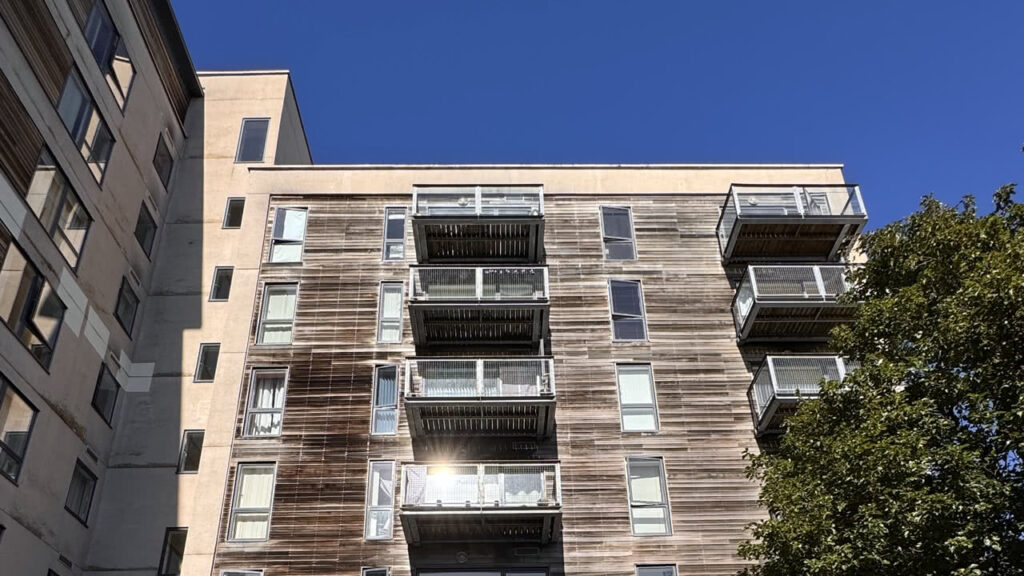
A FRAEW (Fire Risk Appraisal of External Walls) is a structured assessment of a building’s external wall construction, carried out under the PAS 9980 code of practice published by the British Standards Institution. It evaluates how a building’s façade would behave in a fire, identifies hidden risks behind the visible outer skin, and produces an evidence-based risk rating to inform insurance, mortgage lending, and remediation decisions.
MAF Associates delivers FRAEW and PAS 9980 assessments UK-wide for freeholders, managing agents, housing associations, developers and lenders. Our approach is competent, proportionate and commercially aware. We use intrusive investigation only where it is genuinely required, and our reports are written to be useful to the people who have to act on them.
Our 5-stage FRAEW assessment process
Every FRAEW we deliver follows the same five-stage process. This protects you against scope creep, gives you defined deliverables at each stage, and produces a report that holds up to insurer, lender and regulator scrutiny.
Pre-assessment information gathering
Review available plans, materials data, previous assessments and remediation records to establish baseline knowledge.
Site inspection and sampling
A competent fire engineer inspects the external wall system. Targeted intrusive investigation where records are incomplete.
Risk analysis using PAS 9980 criteria
Evaluation of combustibility, cavity barriers, fire behaviour factors and means of escape against PAS 9980 criteria.
Risk rating and recommendations
Clear risk rating (low, medium or high) and proportionate measures, from monitoring through to specific remedial works.
Reporting and stakeholder communication
Comprehensive written report suitable for insurers, lenders and regulators. Direct stakeholder engagement where helpful.
For an example of this process in practice, see our Bristol MHCLG developer remediation case study.
Why building owners choose MAF Associates
Five reasons building owners, managing agents and developers commission MAF Associates for FRAEW and PAS 9980 work:
Competent assessors with built-environment depth
Our fire engineers, façade surveyors and risk assessors have extensive experience across the building stock that PAS 9980 was written for. Our directors hold professional accreditations including C.Build E, MCABE, MICWCI, MIFSM, AMIFPO, MIConstM, FireACQP, SIIRSM and FSIDip.
Proportionate, commercially aware advice
A high risk rating does not automatically mean cladding replacement. We work hard to identify the proportionate response, which protects your residents and your capital position equally. We have delivered this approach on complex projects under schemes including the MHCLG Developer Remediation Scheme.
Modern investigation tools
We use drones and laser scanning for accurate façade examination where appropriate, alongside traditional inspection methods. This is faster, safer, and produces a better evidence base for the report.
Single point of contact across fire safety
FRAEW and PAS 9980 rarely sit in isolation. We also deliver EWS1 forms, internal fire risk assessments, fire engineering and ongoing consultancy, so the building’s full fire safety position is held by one team.
Integration with the wider compliance picture
Our assessments align with the Building Safety Act, the Fire Safety Order, the Fire Safety Act 2021 and current government guidance. The report sits inside a coherent compliance position, not as an isolated document.
How we price FRAEW assessments
Every FRAEW is priced to the building. We provide a fixed-fee proposal once we understand the scope, but to help you anticipate that, here is how we frame our pricing.
Buildings below 11 metres
Typically the most straightforward scope. We offer a competitive entry-point fee, fixed once we have confirmed suitability and scope.
Buildings above 18 metres
Priced to scope, based on height, complexity, construction type, access requirements and the depth of reporting required. We quote in writing, with assumptions clearly set out.
Multi-block schemes
Priced to scope, based on the number of blocks, the survey requirements, and the reporting structure you need (consolidated portfolio, individual block reports, or both).
To receive a fixed-fee proposal for your building, get in touch with the basic details (location, height, number of units, any existing reports) and we will come back to you with a costed scope within 5 working days.
Sectors we serve
We deliver FRAEW and PAS 9980 assessments across the building types and ownership structures that the standard was written for:
- Multi-occupied residential buildings, including high rise and mid rise blocks of flats
- Purpose-built student accommodation (PBSA) with complex façades or attachments
- Mixed-use buildings with residential occupation above commercial
- Housing association and local authority residential portfolios
- Build-to-rent and private rented sector portfolios
- New developments requiring assessment ahead of insurance or mortgage finalisation
- Existing buildings undergoing remediation planning, insurer review or sale