What Is a FRAEW and When Does a Building Need One?
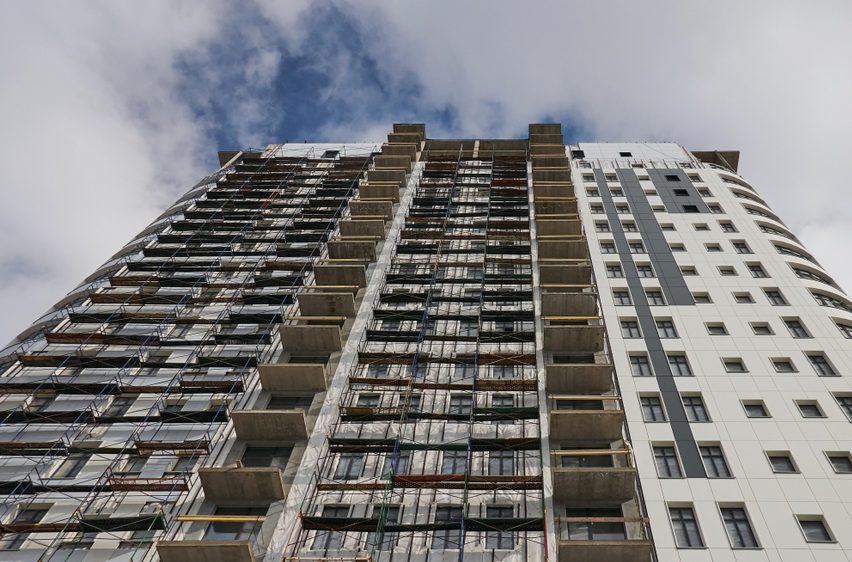
External wall fire safety is an important consideration for building owners, managing agents and anyone responsible for residential buildings across the UK.
You may have come across the term FRAEW, which stands for Fire Risk Appraisal of External Walls.
A FRAEW provides a structured assessment of the fire risk associated with a building’s external wall construction. It looks beyond the visible surface and considers how the materials, systems and overall wall build-up could behave if a fire occurred.
So, what does a FRAEW involve, when might a building need one and what happens after the assessment has been completed?
What Is a FRAEW?
A Fire Risk Appraisal of External Walls assesses the risk of fire spreading across or within a building’s external walls.
The assessment follows the methodology set out in PAS 9980:2022, the recognised code of practice for assessing the fire risk of external wall construction on existing multi-storey and multi-occupied residential buildings.
Rather than focusing on whether one particular material is combustible, a FRAEW considers the external wall system as a whole.
This may include cladding, insulation, cavity barriers, fire stopping, balconies and other attachments, as well as the way these different elements interact.
The aim is to establish a clear understanding of the level of risk and determine whether any further action is needed.
When Might a FRAEW Be Needed?
Not every building will require a detailed FRAEW.
In some cases, a competent fire risk assessor may be able to establish that the external walls present a sufficiently low level of risk without carrying out a full appraisal.
A FRAEW may be appropriate where there is a known or suspected fire risk associated with the external wall construction. This could involve concerns about combustible materials, insulation, cladding systems or other components within the wall build-up.
It may also be requested where building owners, insurers, lenders or other relevant parties need more detailed evidence about the external wall system.
The decision should be based on the characteristics of the building and the potential risks involved. It should not be assumed that every property requires the same type or level of assessment.
What Does a FRAEW Look At?
External walls can be more complex than they appear from the outside.
For example, a building may have a simple brick exterior, while the materials and construction behind the visible surface are considerably more varied.
A FRAEW may consider:
- The materials used within the external wall
- The combustibility and potential fire behaviour of those materials
- The presence and condition of cavity barriers and fire stopping
- Cladding and insulation systems
- Balconies and other external attachments
- The potential for fire to spread across or within the façade
- The effect external wall fire spread could have on occupants and their ability to escape
This wider assessment is important because the fire risk cannot always be understood by examining one material in isolation. The way the different components are designed, installed and connected can also influence how fire and smoke may spread.
Will a FRAEW Require an Intrusive Survey?
An intrusive survey may be needed where existing information does not provide enough detail about the external wall construction.
Drawings, construction records and previous surveys can all be useful sources of information. However, these records may be incomplete, inaccurate or unavailable, particularly for older buildings.
Where there is uncertainty about the wall build-up, targeted intrusive investigations can help identify the materials, cavities, barriers and other components that are present.
The extent of the intrusive work should be proportionate to the information required. The purpose is not to open up a building unnecessarily, but to ensure that important fire safety decisions are supported by reliable evidence.

What Happens During a FRAEW?
The process usually begins with a review of the available information about the building. This may include plans, previous reports, material specifications and records of earlier remediation work.
A site inspection is then carried out to examine the external wall system and identify any areas that require further investigation. Where information is missing or uncertain, additional sampling or targeted opening-up may be recommended.
The findings are assessed using the PAS 9980 methodology. This takes account of the materials and construction, their potential fire behaviour, the building’s characteristics and the wider fire safety arrangements.
The completed assessment provides a risk rating and recommendations based on the evidence gathered.
This gives building owners and those responsible for fire safety a clearer basis for deciding what action, if any, should be taken.
What Happens After a FRAEW?
A FRAEW does not automatically mean that extensive remediation work will be required.
Its purpose is to understand the level of risk and identify a response that is proportionate to the findings.
Depending on the outcome, the recommendations may include continued monitoring, changes to building management arrangements or specific remedial works.
Where improvements are needed, the assessment can provide the evidence required to help building owners and managers plan the next steps.
This is particularly important because removing or replacing an entire external wall system is not always the most appropriate solution. Any decision should reflect the actual risk presented by the building, rather than being based solely on the presence of a particular material.
What Is the Difference Between a FRAEW and an EWS1 Form?
FRAEW and EWS1 are often discussed together, but they serve different purposes.
A FRAEW is a detailed appraisal of the fire risk associated with a building’s external wall construction.
An EWS1 form is primarily used for valuation purposes. It may be requested by mortgage lenders or valuers when a property is being sold or remortgaged.
In simple terms, a FRAEW provides the detailed assessment and supporting evidence, while an EWS1 records an outcome for valuation purposes where one is required.
Understanding this distinction can help building owners avoid commissioning the wrong service or assuming that one document automatically replaces the other.
Why Does Competence Matter?
Assessing an external wall involves more than identifying the materials that have been used.
The assessor needs to understand how those materials interact, how fire could spread, how the building is occupied and how the external wall relates to the wider fire safety strategy.
More complex buildings and wall systems may also require specialist fire engineering expertise.
Working with appropriately competent professionals helps ensure that the conclusions are based on reliable evidence and that any recommendations are suitable for the building in question.
A Proportionate Approach to External Wall Fire Safety
Every building is different. Its height, construction, materials, occupancy and existing fire safety measures can all influence the level of risk.
For that reason, a FRAEW should provide more than a simple pass-or-fail answer.
A well-considered assessment should help those responsible for a building understand the external wall construction, the risks it presents and the action that may be proportionate.
We provide FRAEW and PAS 9980 assessments for buildings across the UK, supported by wider expertise in external wall safety, fire engineering, EWS1 forms and remediation.
If you are unsure whether your building requires a FRAEW, our team can review the available information and help you understand the most appropriate next steps.